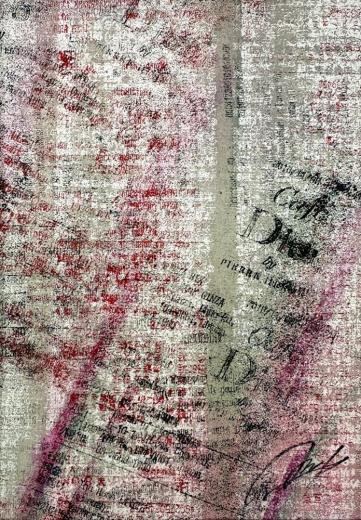
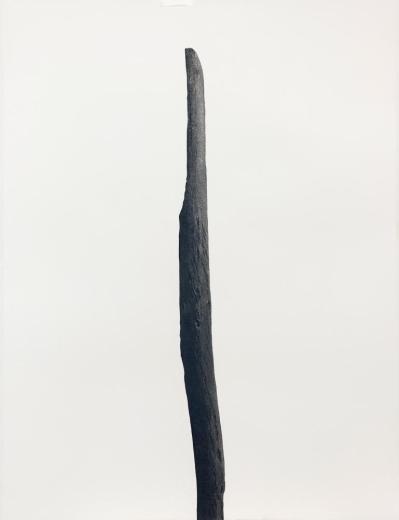
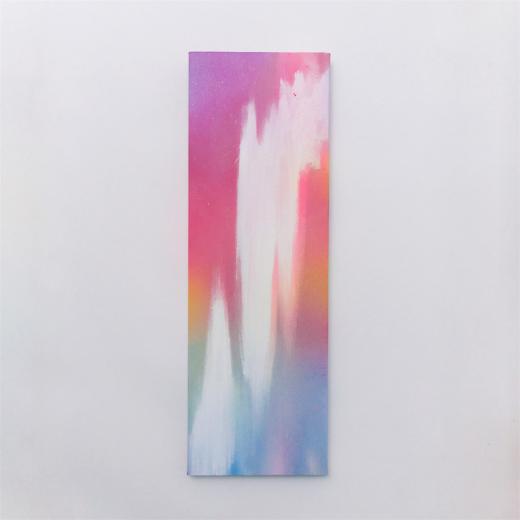
斎藤義重による作品「ボードパン K」、合成樹脂、アルミ板によるエディション作品(ED.50)である。1971年制作、版上サイン入り。
本作は、黒いアルミ板の表面に滑らかな質感の層を形成し、その上に線描のような刻線が加えられた構成を持つ。画面中央には柔らかな輪郭をもつ大きな形態が浮かび上がり、その内部に鋭い線の痕跡が配置されている。単色に近い抑制された色調の中で、素材の質感や光の反射が微妙な表情を生み出し、静かな緊張感を持つ画面が形成されている。
1970年代の斎藤義重は、金属板や合成樹脂などの工業素材を用いながら、平面と立体の境界を探究するレリーフ的な作品を数多く制作した。本作にもその特徴が見られ、絵画的な画面構成と物質としての存在感が重なり合うことで、光や空間の変化によって表情を変える抽象的な構造が生み出されている。
斎藤義重は日本の戦後抽象美術を代表する作家の一人であり、素材の物質性と空間構造を重視した作品によって、絵画と彫刻の中間領域を切り開いた。本作はその制作思想を示す1970年代の作品として位置づけられる。
This is an edition work by Yoshishige Saito composed of Bopan K board, synthetic resin, and aluminum plate (ED.50), created in 1971 and bearing a plate signature.
The composition presents a dark aluminum surface layered with smooth material, into which delicate engraved lines are introduced. A softly contoured form emerges at the center of the composition, while sharp linear marks appear within the shape. Within the restrained monochromatic surface, subtle reflections of light interact with the material texture, creating a quiet yet tense visual presence.
During the 1970s, Yoshishige Saito produced numerous relief-like works using industrial materials such as metal plates and synthetic resins. These works explored the boundary between painting and sculpture, emphasizing both the physical presence of the material and the spatial qualities of the surface.
Saito is regarded as a major figure in postwar Japanese abstraction. Through works such as this, he developed a distinctive visual language that merges material structure with spatial perception, positioning his practice between two-dimensional painting and three-dimensional form.